Since I discovered these two products, my dry, flaking scalp has reduced significantly.
Picture this: you’re on holiday in a beautiful, picturesque city in Europe. The sun is shining, the birds are chirping, and the trees sway to the gentle breeze ushered in by mountains in the distance. You look beautiful, and feel even more so. You raise your phone to take a selfie. *snap*. You journey to your camera roll to inspect your new selfie. You love it, but something feels… off. You look at your makeup, skin, and braids. Something catches your eye. You zoom in on your scalp… and it’s white and flaking.
Spotting dry, flaking skin on your scalp can instantly make any Black woman self-conscious. This is especially true given the significant attention paid to hair and scalp health within our community. Its visibility against darker hair or intricate braided styles only amplifies this concern. It’s incredibly annoying and inconvenient, transforming what should be a relaxing experience into a constant battle. The pervasive anxiety of flakes dusting your clothes leads to endless self-checks and a reluctance to fully engage in social situations or even simple activities. This disrupts focus, making one preoccupied with managing the issue rather than enjoying their surroundings. What is meant to be a carefree time becomes burdened by the constant presence of an irritating, visible problem.
Before we go any further, it’s crucial to differentiate between dry scalp and dandruff. While both conditions manifest on the scalp, they are fundamentally distinct in their causes and characteristics. Misidentifying the issue can lead to ineffective remedies and prolonged discomfort.
Read also: These exciting braids will inspire your next hairstyle
Dry scalp or dandruff?
Dry scalp typically results from a lack of moisture in the skin, similar to dry skin on other parts of the body. When the scalp doesn’t produce or retain enough natural oils, the skin becomes dehydrated, tight, and can flake. These flakes are usually smaller, whiter, and drier, often falling off easily. Environmental factors like cold, dry weather, excessive washing, using harsh shampoos that strip natural oils, or even dehydration can contribute to a dry scalp. If you have dry skin elsewhere on your body, you’re often more prone to a dry scalp.
Dandruff, on the other hand, is a common form of seborrheic dermatitis, an inflammatory skin condition. It’s often linked to an overgrowth of Malassezia, a yeast-like fungus naturally present on the scalp, which thrives in oily environments. This overgrowth, combined with excess oil production (sebum) and an individual’s immune response, causes skin cells to shed at an accelerated rate. Dandruff flakes can be larger, oilier, and can appear white or yellowish, often adhering to hair strands and the scalp. Dandruff can also present with an oily, red, or scaly scalp, and the itching can be more intense than with dry scalp.
Dandruff remains a common concern for African Americans, with reports citing prevalence as high as 81-95% of the demographic. This is influenced by factors like less frequent washing for protective styles, and the use of oil-based products which can encourage yeast overgrowth.
My great scalp combo
I discovered Dear Ketandu, a lifestyle beauty brand, at the Gather market at Alliance Française, Ikoyi. They approach beauty holistically, caring for your whole self — body, mind, and spirit.
The brand’s name, KETANDU, originates from the Igbo language of Nigeria, meaning, “for you shall have abundant life.” The brand curates every product meticulously to deliver high-performance results, achieved through an innovative fusion of naturally sourced botanicals and clinically proven ingredients.
For my own dry scalp, I rely on two key products from Dear Ketandu: their THB Scalp Drops and the Super Tonic Elixir. These have been essential in caring for my scalp’s needs.
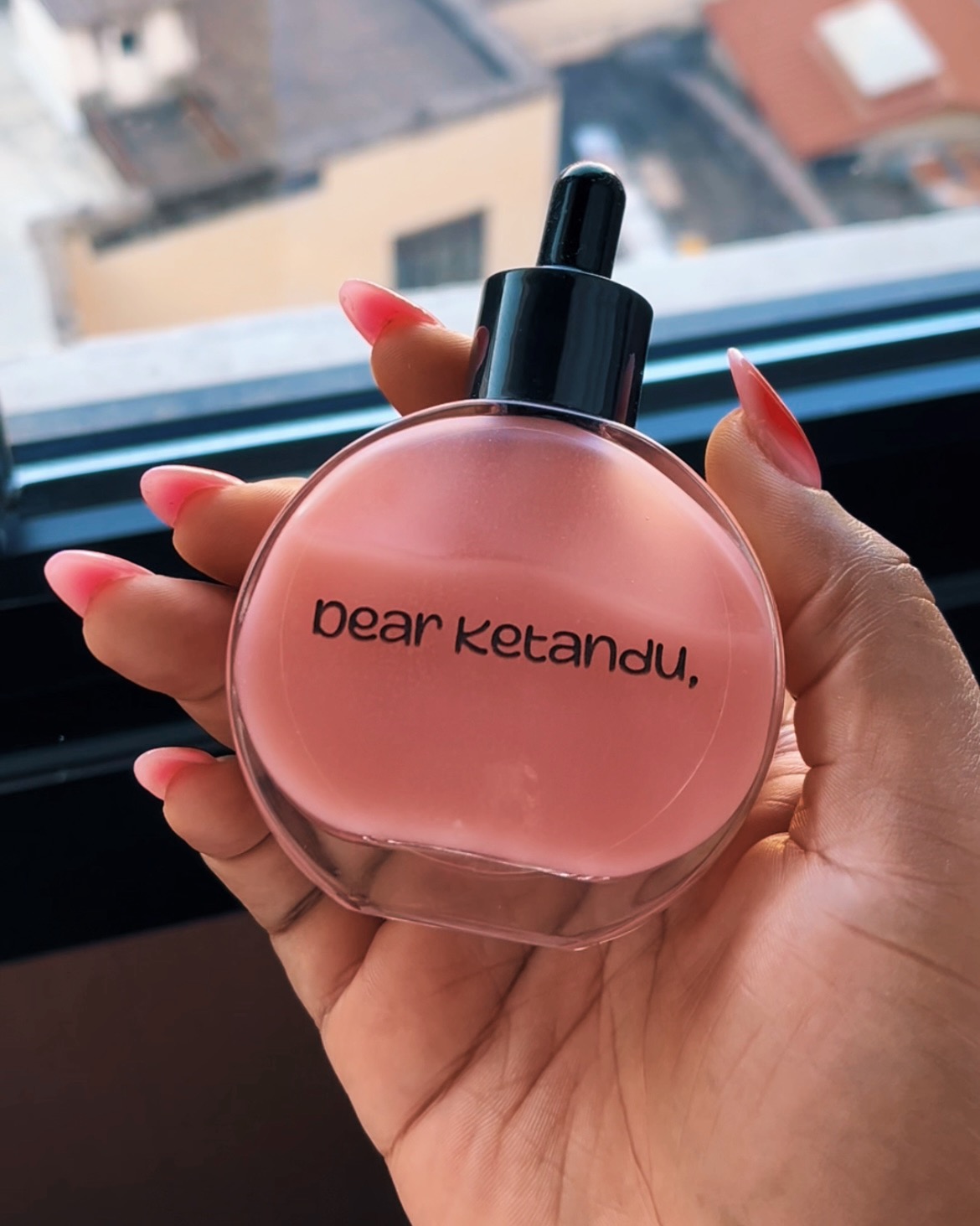
THB Scalp Drops
₦ 16,850
This water-based, fast-absorbing serum works to exfoliate, calm irritation, and stimulate growth right at the root. It actively helps reduce flaking, balance oil production, and effectively treats common scalp issues like dandruff, eczema, and buildup.
Formulated with 2% salicylic acid, these drops dissolve congestion, excess oil, and dead skin, ultimately unclogging follicles and restoring balance. It’s truly ideal for anyone with a dry, flaky, or congested scalp, setting the perfect stage for healthier hair growth.
On a personal note, I absolutely love its scent and the refreshing, cool sensation it leaves on my scalp, making it feel clean, refreshed, and perfectly rehydrated after every use.
Complementing the drops is the Super Tonic Elixir, a truly potent hair treatment designed to boost hair health. I absolutely love its ingredients! It blends rose water with nourishing oils and vitamins. Botanical extracts like aloe vera gel, shea butter, and ashwagandha super charge it for intensive care and transformation.
What makes it truly special for me is that, beyond being a hair mist, it strengthens follicles and refreshes braids and cornrows. I love how it smells and how hydrating this is!
P.S – You save ₦2,000 when you buy both together.
Read also: More Than Makeovers: How African Salons have shaped Communities for Generations
My top tips for dry scalp
Managing dry scalp, especially for Black women, requires a multi-faceted approach that prioritises hydration, gentle care, and understanding your scalp’s unique needs. Here are some of my favourite tips:
Re-evaluate your washing routine
Finding the right wash schedule is key. Washing your hair too often with harsh shampoos can actually strip your scalp of its essential natural oils, making dryness worse. On the flip side, stretching out washes for too long can lead to product buildup, which also irritates your scalp and contributes to dryness. The goal is to find that perfect balance — a wash frequency that suits your hair and lifestyle without causing either extreme.
Choose gentle, hydrating products
When selecting hair care products, prioritise those that support scalp health. Opt for sulfate-free and moisturising shampoos, as sulfates are harsh detergents that strip natural oils. Instead, look for nourishing ingredients like glycerin, hyaluronic acid, aloe vera, and natural oils.
Always follow with a hydrating conditioner, ensuring you apply it to both your hair and scalp to add moisture and soothe. For extra care, consider incorporating leave-in scalp serums or oils with beneficial ingredients such as jojoba oil, argan oil, and coconut oil to hydrate and balance.
As a rule of thumb, avoid products containing high alcohol content, strong fragrances, or excessive chemicals. These can dry out or irritate your scalp.
Incorporate oils and moisturisers
Moisturising treatments are absolutely vital. Regularly massage a small amount of lightweight natural oils like jojoba, argan, or olive oil directly into your scalp. These effectively mimic your scalp’s natural sebum, offering direct moisture. For those with thicker hair or protective styles, a slightly heavier oil like coconut oil can also be beneficial, but remember to use it sparingly to prevent product buildup.
Additionally, treat your scalp to deep conditioning masks weekly or bi-weekly for intense hydration. Whether it’s a commercial scalp mask or your own DIY masks, make sure you’re getting your moisture.
Read also: Cotton’s not cutting it — your hair and skin deserve a silk upgrade
Protect your scalp
To protect your scalp from further dryness, be mindful of external factors and styling habits. Limit heat styling whenever possible. Excessive heat from blow dryers, flat irons, and curling wands can severely dehydrate your scalp. Opt to air-dry your hair. Use heat protectants, and minimise direct heat application to the scalp when styling is necessary.
Similarly, protect your scalp from environmental elements. Harsh sun, dry winds, and extreme cold all contribute to dryness, so wear hats or scarves outdoors in strong sun or cold weather. Finally, always be gentle with your styling choices, avoiding styles that pull too tightly on the scalp, as this can lead to irritation and worsen existing dryness.
Keep internal hydration and diet on lock
Don’t underestimate the power of internal health. Stay hydrated by drinking plenty of water daily, as overall body hydration directly impacts the health of your skin and scalp.
Complement this with a balanced diet rich in essential fatty acids like omega-3s from fish, nuts, and seeds. Vital vitamins, especially B, A, C, D, E, and minerals like zinc, are crucial for maintaining a healthy scalp too.
Gently exfoliate where necessary
If you have some buildup or minor flaking, a gentle scalp exfoliant (physical or chemical) can help remove dead skin cells and allow moisturisers to penetrate better. However, be very gentle and don’t over-exfoliate, as this can worsen irritation.