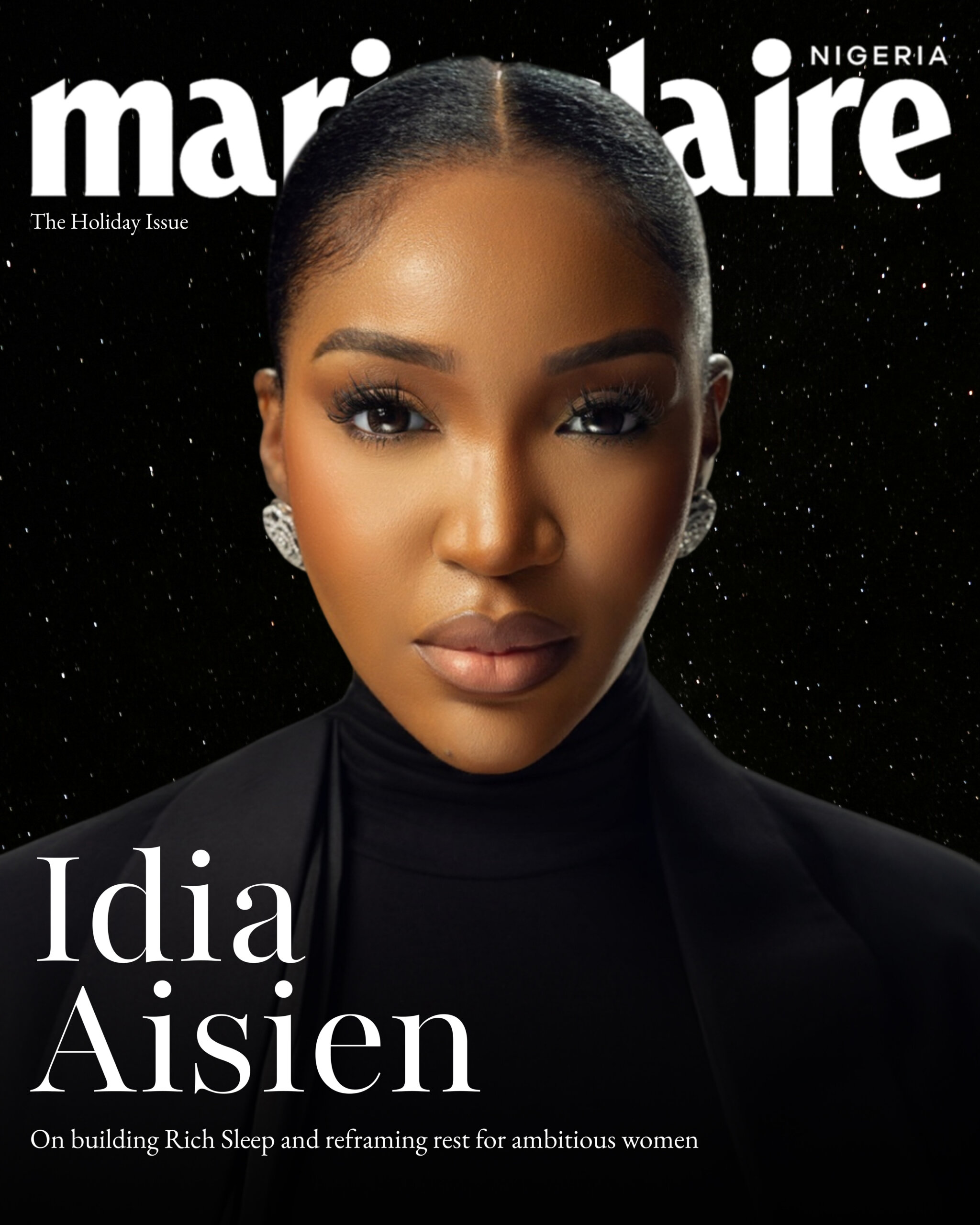
Isra Chaker is building a movement and saving lives by making it her mission to transform maternal health care for those who need it most.
As CEO of Every Pregnancy Isra Chaker is igniting a movement. Through Every Pregnancy, she bridges faith, philanthropy, and global health in a way that’s both deeply personal and capable of driving systemic change. Her viral “For Mama” campaign mobilised millions in donations during Ramadan and reshaped how maternal health is funded and discussed. Because every woman and baby — no matter their location, income, or circumstance — deserves access to quality, affordable healthcare. Yet too many still die from preventable complications simply because essential care remains out of reach.
In this edition of #MCNWorkLife, we speak with Isra Chaker, CEO of Every Pregnancy, a global movement working to transform maternal and newborn health. What began as a question from the Gates Foundation — how to engage the Muslim community in supporting mothers in need — quickly evolved into a viral campaign and, eventually, a coalition of over 50 organisations across 20 countries. With a focus on advocacy, awareness, and care, Chaker shares how Every Pregnancy is working to shift the narrative and disrupt systems that have long failed the most vulnerable mums and babies.
What inspired you to start Every Pregnancy?

Every pregnancy’s origin story is actually unique. The Gates Foundation approached me to explore an idea: something we give the Muslim community to raise awareness or raise funds for maternal and newborn health care, prioritising giving them food and water. The Muslim community is the most philanthropic in the world, and unfortunately, Muslim mums have a high maternal mortality rate compared to other populations. The Gates Foundation asked if we could make this happen? How could we address this?
My recommendation was to make it a campaign, and we launched the “For Mama” campaign. Of course, the Gates team’s leadership was very supportive, and they’re the ones who continue to support this mission. The first campaign on social media, focused on advocacy and awareness, went viral, garnering widespread endorsements and engagement among millions of people globally. The Gates Foundation continued to support me as I wanted to grow it as an organisation and a partnership-driven coalition.
The idea was just a question, and it’s now yielded into this incredible movement without borders, where we have over 50 organisations and our partners are operating in over 20 countries. They are serving mums and babies that are hardest to reach, and they are also on the front lines of this crisis. And so Every Pregnancy is really here to disrupt the way the world approaches maternal, newborn, and child health, and to prioritise it.
We’ve really been able to do that by being so successful in raising over $34 million across just two Ramadan campaigns. We are engaging with people around the world, including in Nigeria, where we now have partners with whom we’ve already established relationships. Every Pregnancy is continuing to support locals on the ground and lead this effort, and in a country with Nigeria’s high maternal mortality rate, one of the highest globally.
What challenges did you face while bringing Every Pregnancy to life?
I don’t think anything worthwhile comes without obstacles or challenges. I think even in the tremendous success we’ve had with Every Pregnancy over the past two years, from campaign to transition to full organisation, we’ve faced some challenges. We became an organisation officially in January of this year, so this is still month nine of our inception. I’m very proud of the accomplishments we’ve achieved, especially the growth of our partnership network, which is a testament to our efforts.
The fact that we have partners who have been with us since the beginning and want to continue engaging in this coalition shows that this is a tremendous experience. They’ve seen the value of a coalition like ours, a trailblazing movement that hasn’t existed before. One of my challenges is figuring out how to get a community to buy into something they’ve never been conditioned to buy into.?
The Muslim community — and I am Muslim, so I recognise this from firsthand experience — has always been told to give your zakat money to food, water and feed a family. That is so impactful, and I had to change the way the community sees maternal, newborn, and child health to make it a priority for them and to help build awareness. We wanted to share a story that relates to anyone, no matter what type of faith you practice or the identities you hold.
We overcame this by getting zakat eligibility for the work. That was a game-changer because being able to have that eligibility meant everyone was required Islamically to give their zakat to this project every year. We gave them a chance to donate their zakat to something that will sustain not just a mum’s or a baby’s life, but a family’s and a community’s life. When you invest in mums, everyone prospers.
Another challenge we had was that no one was really talking about this issue. No one was talking about how the maternal mortality rate is the highest for Muslim mums. They were not talking about our responsibility as a community to care about this. We wanted to address the challenge of penetrating a community’s silence around the issue and making noise.
Our solution: We recruited over 60 influencers and champions, including prominent Muslim scholars and famous football players like Paul Pogba, to endorse this campaign. We worked with actors, activists, and journalists. They shared their own perspectives and discussed the importance of saving a mother’s and a baby’s lives, caring for them, and investing in maternal-newborn health.
The last challenge really is, how do you continue to grow a movement that is without borders? Meaning every community we’re operating in, every country has a completely different cultural context. That was critical because we already know that we can reach mums and babies who need the most care. This is possible because our partners on the ground in Nigeria in Pakistan in Somalia in Syria or Gaza are on the frontlines.
They understand the context of the community in which we’re operating, they’re indigenous to those lands, and they understand the language of the people. These people are well-known and know how to frame and solve this issue. For us, it’s really critical that, as an organisation, we put them front and centre and amplify their needs. Because, to grow a movement —especially as fast as we’ve grown — it can’t be a top-down approach. It can’t be the traditional neo-colonial aid approach.
What message do you have for the young Africans who aspire to create change in the health sector?

I think it’s important that I recognise that I’m a light-skinned privileged woman, and I feel like I shouldn’t be giving directions to other communities, especially communities that are more affected by this. What I will say is that there are so many incredible African youth and leaders who are actually leading this movement. I am learning from them, and I have a lot to gain from watching their experiences and how they navigate around this issue. I never ever thought that I would be doing this. I’m not a global health advocate. I’m not a doctor. I don’t have a degree in these things.
Then I quickly realised that you don’t need to understand health to recognise that it should be a human right for everybody. Recognising that everyone should have access to health care, and that it should be affordable, accessible and of the highest quality, no matter where a person is, helped drive Every Pregnancy forward. No matter where a person is, especially a mother and baby, who find themselves whether that be a genocide or displacement or a human humanitarian disaster, they deserve access to good healthcare practices.
My message is simple: do what you can to change how access is granted and advocate for anyone, no matter their identity. We don’t just focus on Muslim women and supporting Muslim women. Although we are a faith-based-driven coalition, the women we serve globally are any mum and baby who needs support.
Read also: Aisha Saludeen is amplifying untold stories through multimedia storytelling.
Leadership in the nonprofit sector, especially as a woman of colour, is often under intense scrutiny. How do you maintain authenticity and purpose under pressure?
There are still so many moments in my day-to-day experiences in this role as the CEO of Every Pregnancy when people don’t believe me when I say I am the CEO. They tend to minimise my contributions or the hard work that I put into building this organisation, from scratch. As well as questioning my capacity, my intelligence and my ability to lead. I think being a visibly Muslim woman and being younger, a lot of times, there are more biases about our capacity and capabilities.
This is an unfortunate experience. As a woman of colour, I constantly have to deal with things like this daily across all sectors, especially when we have such a clear vision and a successful track record.
However, I remain authentic because I don’t let anyone else’s opinion diminish my belief in myself and change how I think about myself, my vision, and my goals. At the same time, I want to take up more space and say, “You don’t get to erase my voice. You don’t even get to frame my voice in a way that it appeals to your agenda.” I know what I stand for. I know what I built here.
Your mission is to ensure that every pregnancy is safe and healthy. What does that look like in practical terms, especially in conflict zones and low-income areas?

It looks like a variety of different things. First and foremost, it’s essential to recognise that in conflict settings, survival is the main priority. It is very hard in low and middle-income countries where a mum prioritises herself and her health when she is trying to make sure her kids are fed, taken care of and clothed. We have to ask: how do we start getting mums to invest in their health, and how do we also invest in a mum’s health, without making it seem like we’re just here to provide band-aid solutions?
When I was in Pakistan, it was not in an active crisis setting, but Pakistan has one of the highest maternal mortality rates. Certain clinics ensure that the number of maternal mortality from postpartum haemorrhage or sepsis, or preeclampsia, is being addressed not just in delivery but during the pregnancy.
That looks like taking care of a mum throughout her entire pregnancy, and sometimes even before she’s even pregnant. Making sure that she’s set up with all the health needs she may have before she even conceives, especially after she conceives, ensuring antenatal checks, that her blood pressure is monitored, and that she’s being tested for anaemia. If she’s being tested and you find out she has high blood pressure or she has anaemia, then immediately treat those two conditions. Treating those two conditions already reduced her likelihood of dying in childbirth tremendously. Many mums bleed out postpartum, haemorrhage when they’re delivering, when they’re most likely anaemic, that’s the number one driver of haemorrhage.
Then, when it comes to conflict settings, ensuring that mums have access to healthcare facilities is a really tremendous and essential factor. When you’re talking about the genocide in Gaza, with the majority of health infrastructure completely destroyed, mums are having to deliver in some of the tents and the displaced areas or amongst the rubble. How can we address that and ensure we’re getting them what they need with very simple, affordable solutions and interventions? That’s our major goals?
What legacy do you want to leave behind with Every Pregnancy?

The legacy I want to leave behind for every pregnancy is one where we don’t even need to have conversations anymore because maternal mortality has ended everywhere. That neonatal deaths and newborn deaths are things of the past. The legacy is that we were part of an ecosystem and helped build one where, in the hardest-to-reach areas, mums and babies are no longer dying from completely preventable complications.
We’re also implementing the most effective solutions and interventions to save a mother’s and a baby’s life. It would be the best legacy to see that the infant mortality and maternal mortality numbers that clinics are reporting month to month reach zero and stay at zero.
That’s what success looks like to me in the work we’re doing. Of course, this can be a long journey, and I hope we can resolve this sooner rather than later. How big can we make this movement, and how many organisations and countries were we able to bring on as stakeholders? I want us to be at 500-plus organisations, I want us to be mobilising hundreds of millions of dollars for maternal newborn healthcare.
I want us to be drivers of change in how mums and babies, especially in low- and middle-income countries, are perceived, talked about, and looked at. All of that needs to be disrupted. I would want people to know about every pregnancy, in particular, that we really are disruptors.
As a mum, what was your experience giving birth, and how did it relate to Every Pregnancy?
I had a challenging pregnancy. I developed complications in my pregnancy, including a heart condition that was very scary and terrifying. I’d never heard of women who developed that while pregnant. Having that experience and having a really challenging delivery and recovery was tough. But I also had privilege and access to the best doctors and the best medications.
I often thought to myself, I don’t know if I would ever have delivered in my home country, Syria, or in any parts of the world that I know do not have these resources. How would I have survived if I had even survived? My experiences gave me a deep conviction: I would do everything I could, in my personal and professional capacity, to support mums and babies anywhere and everywhere. I would do everything I went through all over again for my son, who’s my angel and really my biggest blessing.
Becoming a mum allows you to really understand how much a mum sacrifices, how much she puts her heart and her whole being on the line for her children. It highlights how it is completely unjust that she would have to die or have her child die from preventable complications.
I don’t think I would have been successful in what we’ve built if I hadn’t gone through the pregnancy and childbirth myself. Then I was able to recognise how hard the experience is, how taxing it is, and how much a mum sustains communities, not only her family but the community as a whole. I remind myself often what a blessing it is that I made it through childbirth, and that I survived my pregnancy and that my child survived that. Being able to give back and ensuring that other mums have a good experience is one of my most significant commitments and convictions.
Read more: How my mother’s sacrifice and resilience shaped my view of motherhood