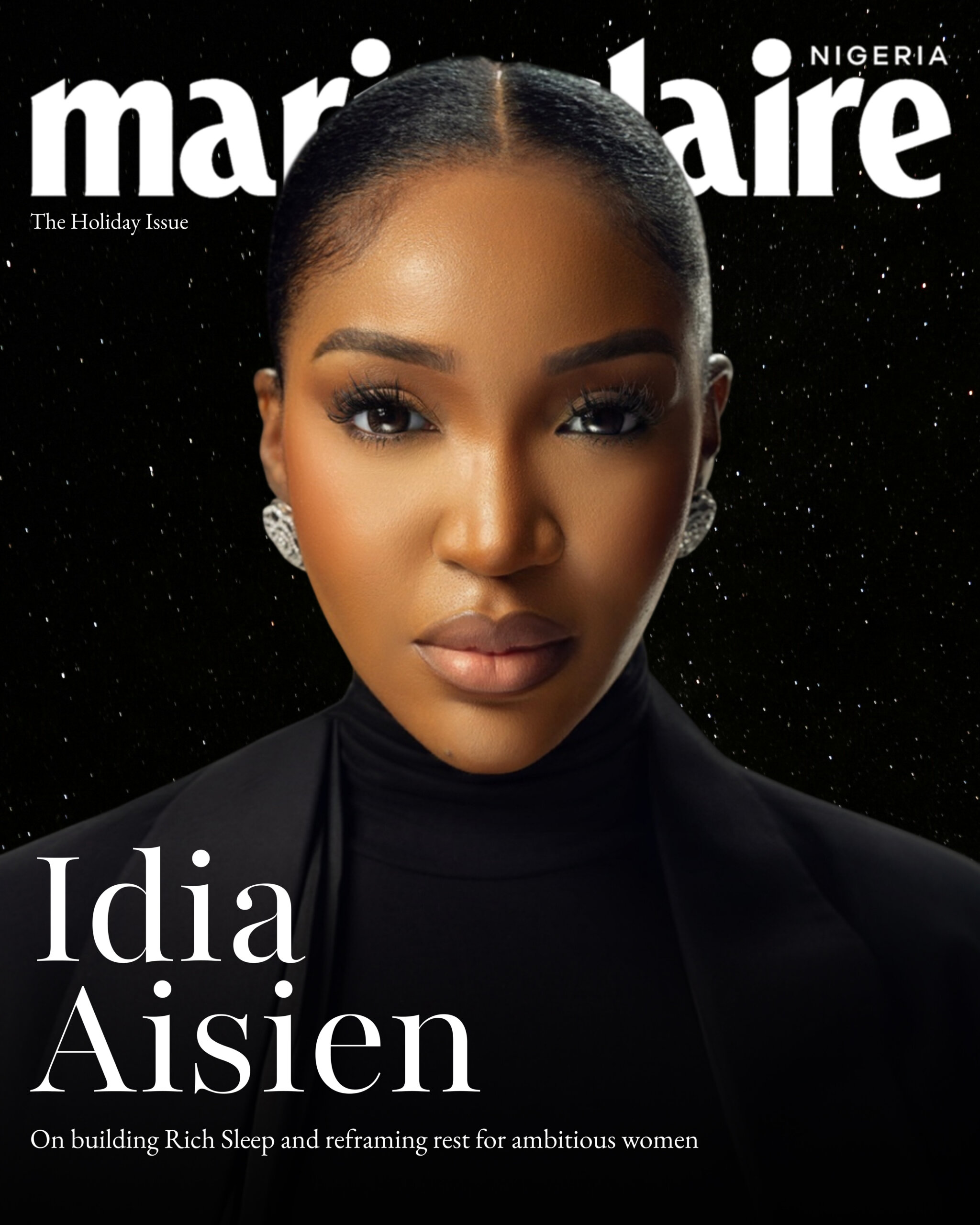
The rise of wealthy women in Nigeria is shaping the story of women’s money, power, and influence, proving that women can build companies, secure global deals, and create industries from scratch.
Wealthy women are still a minority across the world. According to Forbes, fewer than 15% of global billionaires are women, with most wealth inherited rather than self-made. In Africa, the gap is even wider with men owning three times more wealth than women — the widest of any region in the world. Yet, there are Nigerian women changing this narrative by building companies, creating jobs, and securing global deals.
Studying the stories of wealthy women shows us how discipline, creativity, and resilience can translate into lasting wealth. Recently, I wrote an article on how women can grow wealth by investing in stocks. That article and this one share the same goal: to show that women can create wealth, multiply, and pass it on.
These five wealthy women in Nigeria each chose different paths — from media and tech to finance and hospitality — but their stories reveal the many ways women can build lasting wealth.
Jumoke Dada

Jumoke Dada is the founder of Taeillo, a furniture and lifestyle brand launched in 2018. After obtaining a degree in architecture, she turned her design background into a digital-first furniture company. She has received multiple recognitions, including the Tony Elumelu Foundation Award, the Diamond Bank Building Entrepreneur Award, and She Leads Africa Accelerator Award. With her works featured on Elle Decoration South Africa and BBC World News, Dada continues to push the boundaries of African furniture design. She has also been listed among the 100 Most Inspiring Women in Nigeria.
How she made money
Dada’s journey began after attending an interior design conference in 2016, where Japanese and American designers described Africans as consumers rather than manufacturers. Challenged by this, she quit her job and travelled across Nigeria to explore how local resources could be transformed into high-quality furniture using African raw materials.
She created her first piece of furniture during her master’s program for an exhibition, and it sold. When the buyer posted it online, more people started requesting her work. That demand became the spark for Taeillo, which was launched with no startup capital. She made her first product using a deposit from her first customer, generating an initial profit of just ₦17,000. From that modest beginning, she steadily grew the business into a multimillion-dollar furniture brand by 2021.

Growth and scale
Taeillo adopts e-commerce and social commerce to reach customers, while also integrating technology like 3D and augmented reality (AR) to enhance the shopping experience. The company has raised about $3 million in funding across three rounds. Its pre-seed round of $365,000 in 2019 was backed by Montane Capital, Co-Creation Hub (CcHub), and B-Knight. In 2021, CcHub added another $150,000 investment. In 2022, Taeillo secured $2.5 million from Aruwa Capital Management to scale operations, including expansion into Kenya.
By blending design, local sourcing, technology, and smart use of capital, Jumoke Dada transformed Taeillo from a one-woman project into one of Africa’s fastest-growing furniture companies.
Funke Bucknor-Obruthe

Funke Bucknor-Obruthe is a Nigerian lawyer and entrepreneur. The founder and CEO of Zapphaire Events Group (which includes Zapphaire Events, Zapphaire Training Academy, and Decor by Furtullah). She holds law degrees from the University of Lagos and the Nigerian Law School.
How she made money
After practising law briefly and working in advertising, Bucknor-Obruthe followed her passion into event planning. She officially launched Zapphaire Events in the early 2000s, focusing on weddings, corporate events, and high-profile social gatherings. She leveraged her design sense, networking, and impeccable service to win clients. Bucknor-Obruthe also published “The Essential Bridal Handbook”, which positioned her as an authority in weddings.

Growth and scale
On average, Zapphaire delivers an average of 300 events per year in Nigeria and abroad. Bucknor-Obruthe also diversified her business: décor through Decor by Furtullah; education through the Zapphaire Training Academy; media content via her “Funke Says” vlog/YouTube series. Her work has earned multiple awards (Entrepreneur of the Year, Wedding Planner of the Year, etc.), and recognition such as being on the BBC’s 100 Inspirational Women list in 2016. Her training programs and events like TEXA (The Event Xperience Africa) have helped hundreds of aspiring event professionals grow.
Mo Abudu

Alt text: Mo Abudu via Marie Claire Nigeria
Mosunmola “Mo” Abudu is a Nigerian entrepreneur, media mogul, film producer, and philanthropist, often described as “Africa’s Oprah.” She is the founder of EbonyLife Media, which houses EbonyLife TV, EbonyLife Films, and EbonyLife Creative Academy. Her bold vision and execution have made her one of the most powerful wealthy women in Africa’s creative and entertainment sector.
How she made money
Before Abudu became the media and entertainment powerhouse we know today, she explored multiple paths — from dancing and modelling to working as Head of HR and Administration at ExxonMobil. Leaving ExxonMobil shocked many around her, but Mo never completely abandoned her HR dreams. She founded Vic Lawrence & Associates, a human resources consulting firm. They helped establish hospitality spaces such as Oakwood Park Hotel and Protea Hotel as part of her drive to build places for training and development.
Her big breakthrough came at 40 when she launched the talk show “Moments with Mo” in 2006. The show ran for over a decade, with Mo interviewing global leaders such as Hillary Clinton, Christine Lagarde, Olusegun Obasanjo, and Paul Kagame. It aired across 49 African countries and in the United Kingdom, cementing her status as a continental media figure.

Alt text: Mo Abudu via Marie Claire Nigeria
Growth and scale
Never one to stand still, Mo ventured into linear TV by creating her own channel and, in 2012, launched EbonyLife TV. This bold step put her at the forefront of African storytelling on a global scale. By 2016, she expanded into film production, producing box-office hits like “Fifty”, “The Wedding Party”, “Your Excellency”, and “Chief Daddy”. These projects became cultural landmarks and some of Nigeria’s most commercially successful films.
Abudu also secured groundbreaking partnerships with Netflix, Sony Pictures, AMC, and BBC, licensing and co-producing African stories for global audiences. Beyond media, she diversified into hospitality with EbonyLife Place, a luxury lifestyle and entertainment resort in Lagos.
Today, Mo Abudu’s wealth comes from owning intellectual property, global media partnerships, film production, and hospitality investments. Her journey shows how persistence, reinvention, and vision can transform ideas into global influence — and place her among the wealthiest women in Africa.
Read also: Imagine a world where equal pay for equal work is the norm
Bola Shagaya

Hajia Bola Shagaya is one of Nigeria’s most established businesswomen, investors, and philanthropists. She is the founder of Bolmus Group International, a diversified conglomerate with interests in oil and gas, banking, real estate, and photography. She also serves on the board of Unity Bank and has spent decades building an empire across some of Nigeria’s most competitive industries.
How she made money
Shagaya began her career as an auditor at the Central Bank of Nigeria before her entrepreneurial drive took over. She introduced the Konica brand of photographic materials into the Nigerian and West African market in the 1980s. In 1997, she founded Fotofair (Nigeria) Limited, launching photo laboratories on Victoria Island, Lagos, using 100% Japanese Konica technology.
As her photography business thrived, Bola expanded into oil & gas. She founded and became the managing director of Practoil Limited, one of Nigeria’s largest importers and distributors of base oil, supplying lubricant blending plants nationwide. In 2011, she founded Voyage Oil and Gas Limited, which was officially launched in 2012, and trades and exports crude oil. Voyage has held an NNPC crude oil term contract, with allocations averaging 30,000 barrels of oil per day, securing Bola’s place in Nigeria’s oil elite.

Growth and scale
Bola also invested heavily in real estate development. She owns and manages several luxury residential properties across major Nigerian cities, including Lagos and Abuja, as well as international holdings. Her property portfolio adds another solid stream to her wealth, balancing the volatility of oil markets.
For over four decades, Bola Shagaya has built a multi-sector empire spanning photography, oil trading, real estate, and banking. Her businesses continue to thrive, and her role on Unity Bank’s board reflects her influence in Nigeria’s financial sector.
Today, she stands as one of Africa’s wealthiest women, with a legacy built on vision, diversification, and boldness.
Ifedayo Durosinmi-Etti

Ifedayo Durosinmi-Etti is a Nigerian entrepreneur, author, and founder/CEO of Herconomy. She studied Biochemistry at Covenant University and earned an MBA in Global Business from Coventry University, UK. Before founding her businesses, she held marketing, CSR, communication, and sustainability roles in both the UK and Nigeria, including at Arcadia Group, Aspire Acquisitions, and Nigerian Breweries. She is a recipient of the Tony Elumelu Foundation Award, a Mandela Washington Fellow, and has been honoured for her advocacy in women’s empowerment.
Durosinmi-Etti started with children’s furniture and apparel brands — Parliamo Bambini and Philos & Zoe — building businesses that catered to gaps in local supply. Spotting a broader challenge, she then built Herconomy to democratise access to grants, job opportunities, financial literacy, savings and investment tools for women. Her book, Accessing Grants for Start-ups, grounded her early authority.

Growth and scale
Under her leadership, Herconomy raised $600,000 in a pre-seed round in 2021 with most funding from her community and angel investors. Herconomy has since trained tens of thousands of women online/offline, awarded grants to many women-led businesses, and forged partnerships with Amazon, Google, Meta, among others.
The company is also positioning itself to become Africa’s first women-focused bank. Awards, fellowships, and her global impact have cemented her among Nigeria’s leading wealthy women in fintech and social enterprise.
Quick lessons from these wealthy women
It is no news that wealthy Nigerian women are still a minority. Closing that gap matters for opportunity and influence and requires capital, policy, and education. It also takes examples — women who show how wealth is built.
Build something people pay for first.
Turn skills into multiple income streams.
Use funding to scale operations
Seek grants and impact capital when solving social problems.
Invest profits in stocks, funds, and real assets to grow wealth.
Wealthy women may still be fewer than wealthy men, but their rise is undeniable. From media to manufacturing, energy to finance, these five leaders show that with vision, skill, and courage, women can create lasting wealth.