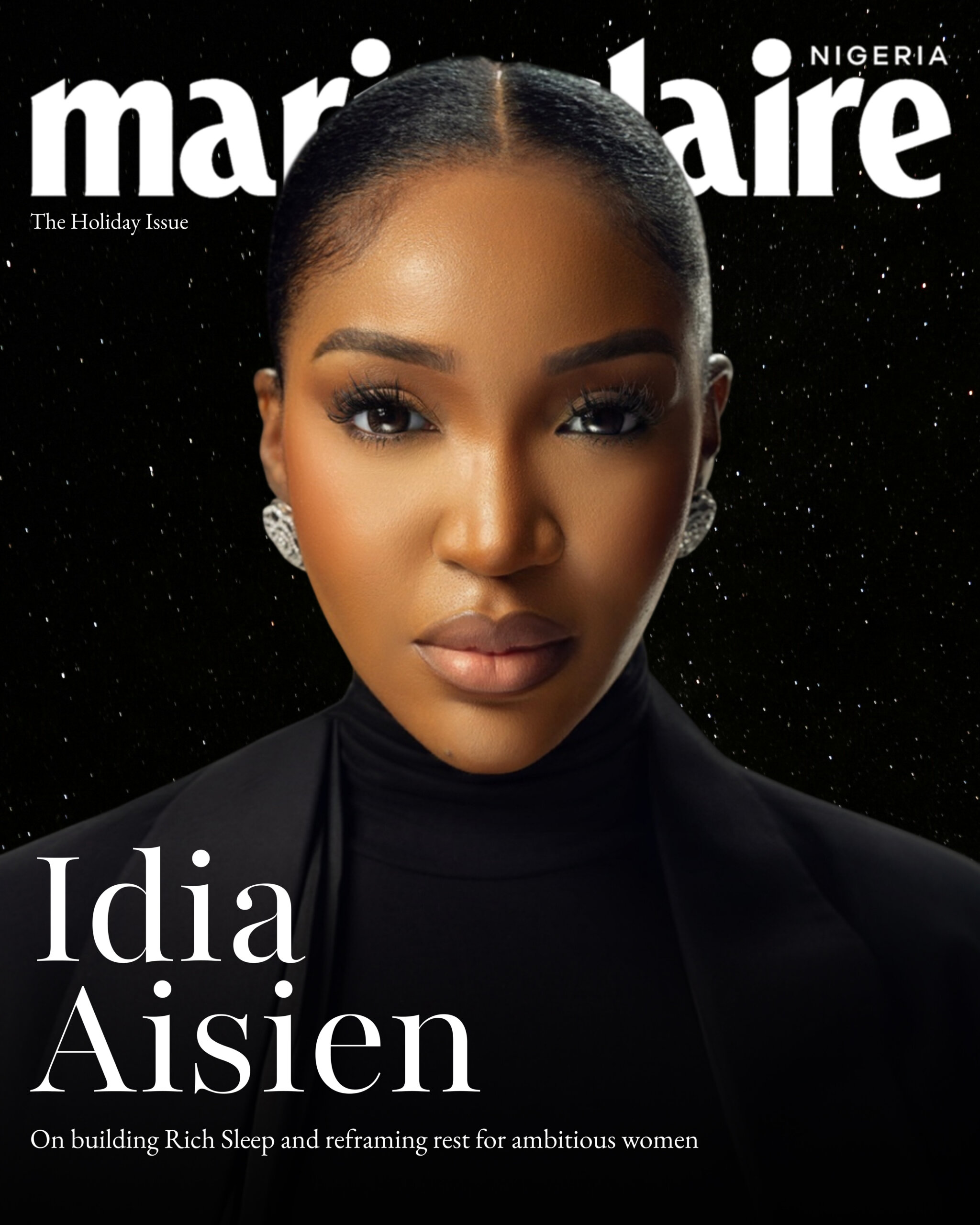
She’s telling authentic Nigerian stories one film at a time through writing, directing and producing.
If you’re familiar with the blooming filmmaking industry in Nigeria, then you’ve probably heard of Blessing Uzzi, film producer, director and writer. After pursuing and attaining a first class degree in International Relations at a reputable university in Cyprus, she moved back home to Nigeria and turned her passion and innate ability to tell stories into a career in filmmaking.
Her most recent feature film, “Freedom Way”, won Best Movie and Best Writing at the 2025 AMVCAs, after premiering at TIFF 2024 and screening at major festivals including AFRIFF, the Red Sea International Film Festival, and the New York African Film Festival.
In this edition of#MCNWorkLife, we speak with Blessing Uzzi about discovering a passion and knack for storytelling behind the camera, and using her filmmaking abilities to challenge social and societal issues.
How would your friends describe you?
My friends would say I’m ambitious, a goal-getter, and focused. And quite playful as well.
Tell us about your journey into filmmaking. Was it a childhood dream, or did you discover your passion later in life?
It wasn’t a childhood dream. I loved watching films as a child, but I didn’t particularly think I’d be a film-maker. However, when I was in university in 2012, I took photography and film as an elective course. I was curious about it and then got a camera and became obsessed. I did a lot of photography for free because I didn’t consider it a career path. It was a hobby. Back then, I had this idea that photographers were broke and that was a big fear for me, so I stayed focused on my course and even made a first class from that.

When I graduated and came home for NYSC in 2016, I somehow ended up in AIT Abuja. I was assigned to the video and photography team, and I quite enjoyed the work; capturing news, interviewing senators etc. Soon, a friend called me and asked me to write a film, and I agreed because I enjoyed the work. But I still saw it as a hobby. Until I started making music videos. My first music video was for Cobhams’ “Starlight.” The amount of money I made from one video was surprising, so that’s when I started to think, okay, maybe this is a viable career path. So I started making music videos and pursuing this as a career. Shortly after, I wrote my first short film: Flux, a film about Lagos traffic. The love for filmmaking has always been there, but I never considered it as a full-time career.
Early film career influences
Who were some of your earliest influences, both within Nollywood and internationally, that inspired you to pick up the camera?
My Nollywood story is quite different; I didn’t watch a lot of Nollywood. I grew up watching a lot of Hollywood movies like action films, “I knew Stephen Spielberg,” and watched a lot of films like “Mortal Kombat,” “Transporter,” “Rush Hour,” “Pulp Fiction,” anything with action. My earliest contact with Nollywood was Niyi Akinmolayon’s blog. He was very passionate and honest on that blog. I didn’t know him or his work, but I found him interesting, so I reached out and we had a conversation. He was my first contact in Nollywood. I did watch “Things Fall Apart,” though. And also “Osoufia in London,” but much later.
What was the pivotal moment or project that made you realise filmmaking was the path you wanted to pursue professionally?
Shooting Cobham’s Starlight. I remember trying to script it like a short film, and people kept saying, it’s a music video, not a short film. But my brain couldn’t comprehend why a music video could not be a short film.
I knew from then that what I was called to do was filmmaking, script, write, produce and direct. With a special focus on building narratives. That was my decision point, but it’s always been a passion of mine. Even my friends told me I’d be a film-maker, I just insisted that it was a hobby, until it wasn’t. I fully decided to be a filmmaker in 2017.
Read also: She’s a wellness muse, mother, and the original premium pie — Meet Nicole Chikwe
A distinct and dedicated approach to storytelling
How do you typically approach a new project, from concept to final cut? What’s your creative process like?
I’m influenced by the things I see, experience, know and read about. I like to tell stories rooted in humanity, in our society as Nigerians. I’m drawn to everyday stories, things that are peculiar to us. Every film begins with an idea; some are personal experiences, some are things I’ve seen or happened to people I know. Sometimes, I give in to writing if I see the story clearly enough in my head or like it enough to write it. In other cases, I hire a writer, someone I think is best for it. I produce, and sometimes I direct. For “Freedom Way”, when I wrote it, I knew somebody else would direct it. I knew I wanted a first-time director who was hungry enough and would bring the vision to life.

What kind of stories are you most drawn to telling, and what themes do you find yourself exploring repeatedly in your work?
I remember reading an article someone wrote where they pointed out that most of my work has hinted at one social issue or the other, but specifically about how it relates to people and touches their lives.
I find that to be true. Even the short films Bluhouse has done — like “A Quiet Monday”, by Dika Ofoma — always hint at social issues. Social issues like policy to human rights call my name, but I’m also interested in other stuff like romance as well. I think art should have meaning, spark conversation, say something about culture, about the state of our minds. The core of whatever story I’m choosing to tell is that I’m saying something. It engages people’s minds, is meaningful and challenges our thought process.
Tell me about Bluhouse Studios. How do you balance artistic vision with the commercial realities of filmmaking in Nigeria?
I haven’t started balancing it yet. While the business is important, there’s a marriage between the business and the creative that many people haven’t explored yet. I think it’s there. Good work will make you money, but I haven’t proven it yet.
Of course, you have to be careful and understand where the industry currently is, but I don’t think you have to compromise; there should be ambition and do projects at the scale you want to do them. At my core, I want to give a story what it asks and what it deserves. I will do my due diligence as a producer, try to get it to distributors and everything, but I believe a good story will find its audience and make good money over time.
On “Freedom Way”, future plans and the future of Nollywood
Your film “Freedom Way” won Best Movie and Best Writing at the AMVCAs 2025, after premiering at TIFF 2024 and screening at major festivals. Could you share other specific moments or projects that felt like a significant triumph or breakthrough in your career?

It’s the little things for me. When “A Quiet Monday”, which I did with Dika Ofoma, premiered at Kurzfilmtage Winterthur, a festival in Switzerland. They flew him out, and it was well-received. It was very fulfilling for me in my career. I felt really good and proud about what Bluehouse Studios is building.
Read also: Adesuwa Belo-Osagie wants to reimagine what homes look like in Nigeria
“Freedom Way”, is your latest film. Was there a particular story that inspired it? How was the process of production? What can viewers expect?
“Freedom Way” is more about government policy that is enforced by police. It has police brutality, but at the core, everything in this film is about government policy. It will be available in cinemas from 18th of July.
How do you see the Nigerian film industry (Nollywood) evolving, particularly in terms of storytelling, production quality, and global reach?
We’re growing, production quality has gotten better. With storytelling, we have more work to do, but I believe we’ll eventually arrive there. If two, three or four individuals continue to push, the industry will start taking a new shape. So I’m very optimistic because I know filmmakers and the lot of work they are doing privately. It’s a lot of work, and people are trying to push the bar, do better and are committed to storytelling and are doing it to the best of their ability. It’s still a long journey, but taking it a day at a time as an industry will help us. We will attain global reach when we get our story right and it’s authentic. That’s what has worked for Korea.
What are your thoughts on the representation of women, both in front of and behind the camera, in Nollywood today? What changes would you like to see?
How we portray women matters. Bluhouse worked with Zikoko on an anthology series focused on women, on how women are portrayed in film and media in Nigeria.
While I encourage honest writing, as a female writer, director or producer, we have a responsibility to portray women as diversely as they exist. Women are not the same everywhere, and so we should stay away from stereotypes. A balance is needed; we can write about real, everyday people we know and see, we should also write about successful women who have balanced lives and are empowered with great love lives. Behind the camera, we have women already doing great things. Nora Awolowo is one of them, doing amazing things behind the camera.
What’s next for you? Are there any upcoming projects or themes you’re excited to explore?
I have a romance story I’m working on that I’m very excited about. I’m also working on another film called “Kachifo” with Dika Ofoma. So, I’ll be back to directing soon.
What advice would you give to aspiring young female filmmakers in Nigeria who are just starting their careers?
Read books, watch films, make films. Keep learning. If you read 10,000 books, if you never make a film, then you’re not a film maker. Make that film.